Tech4Peace Project Targets Livelihood Solutions to Banditry, Kidnapping in Jigawa, Kaduna
By Umar Akilu Majeri Dutse
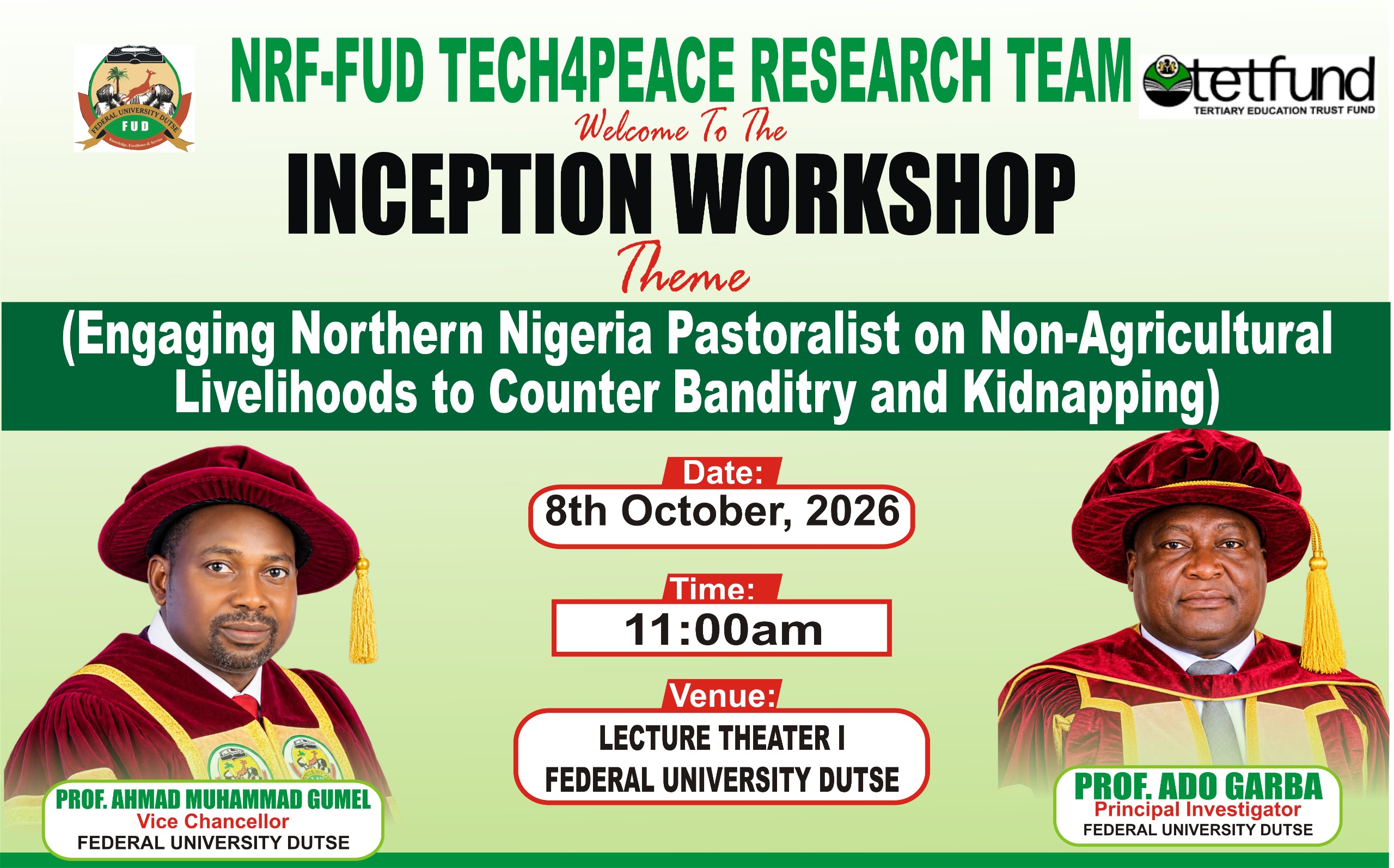
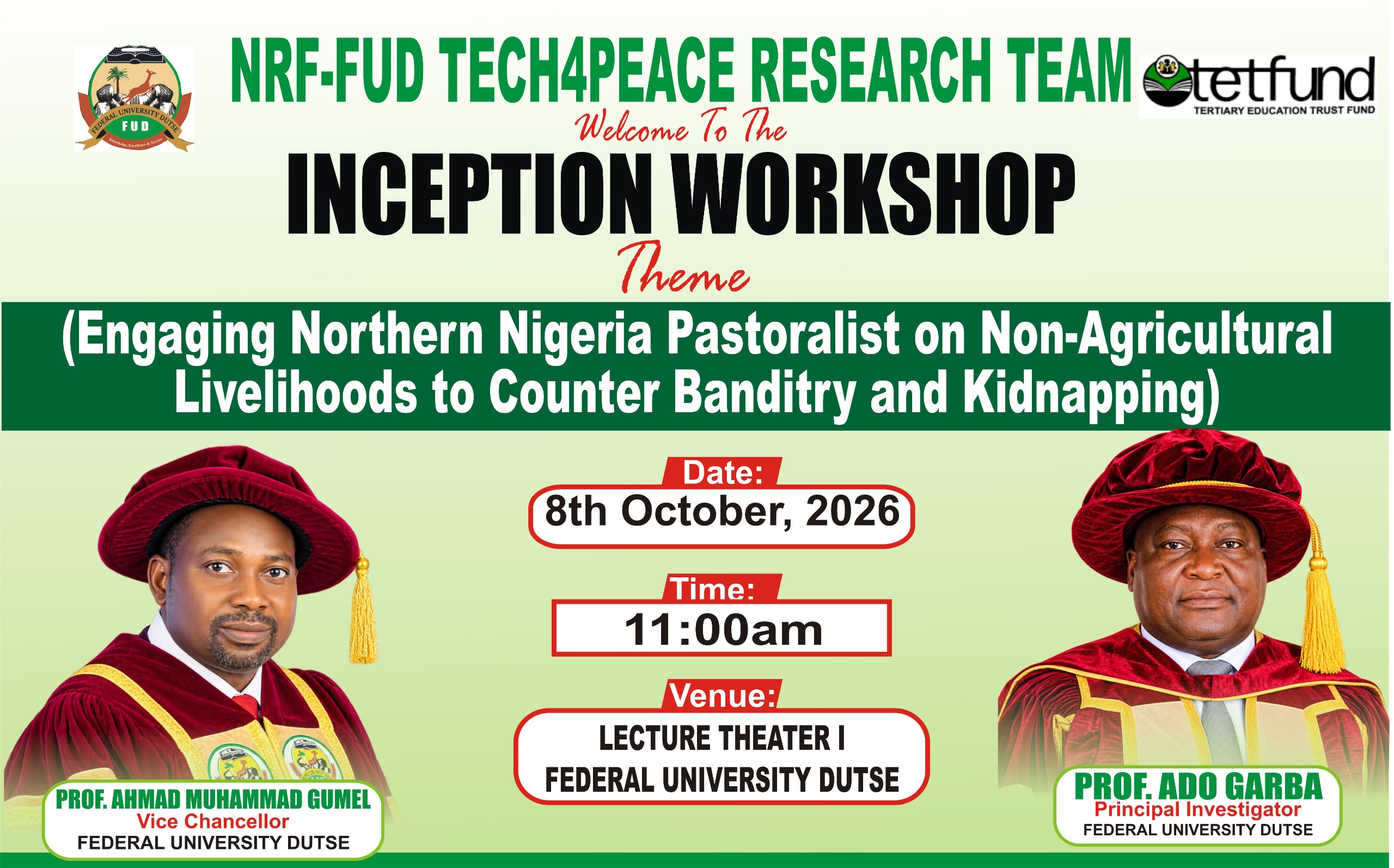
The National Research Fund (NRF) has organised a one-day inception workshop for the implementation of a research project aimed at addressing the socioeconomic factors contributing to insecurity in parts of Northern Nigeria.
The project, titled “Tech4Peace: Engaging Northern Nigeria Pastoralists in Non-Agricultural Livelihoods to Counter Banditry and Kidnapping Activities in Kaduna and Jigawa States,” is funded under the 2025/2026 National Research Fund Award.
Speaking at the workshop, the Principal Investigator of the Tech4Peace Project, Alhaji Ado Garba of the Federal University Dutse (FUD), expressed appreciation to the National Research Fund for supporting the initiative and to the management of the Federal University Dutse for hosting the important event.
He described the research award as a significant milestone, but noted that it also came with the responsibility of generating credible evidence and practical solutions to the socioeconomic dimensions of insecurity in Northern Nigeria.
According to him, the Tech4Peace Project recognises that sustainable peace requires more than security interventions, stressing that attention must also be given to livelihood opportunities, poverty, unemployment and social inclusion.
He explained that the project would explore how complementary non-agricultural livelihoods, supported by skills development, technology, vocational training and entrepreneurship, could expand economic opportunities for pastoralist communities without undermining their traditional livelihoods.
“Our approach will be evidence-driven and participatory, involving pastoralist communities, youths, women, traditional leaders, government institutions and other relevant stakeholders,” he said.
He added that the project would identify livelihood needs, assess available opportunities, strengthen capacities and document lessons that could inform practical interventions and future government policies.
The Principal Investigator acknowledged that livelihood interventions alone could not eliminate banditry and kidnapping, but maintained that expanding productive economic opportunities could strengthen community resilience, promote social inclusion and contribute to peacebuilding.
He therefore urged members of the research team to approach the project with professionalism, integrity and commitment.
“We must respect community knowledge, protect participants’ rights, maintain rigorous research standards and ensure that our findings translate into measurable results,” he said.
He also called on stakeholders to contribute their knowledge, experience and constructive feedback throughout the implementation of the project.
“As we commence this project, let us work together to build a strong foundation for successful implementation and generate evidence that can support sustainable livelihoods and peace in Kaduna and Jigawa States,” he said.
He expressed appreciation to the National Research Fund, the Federal University Dutse, project partners and members of the research team for their contributions towards the initiative.
No comments yet. Be the first to comment!